How cooperation works
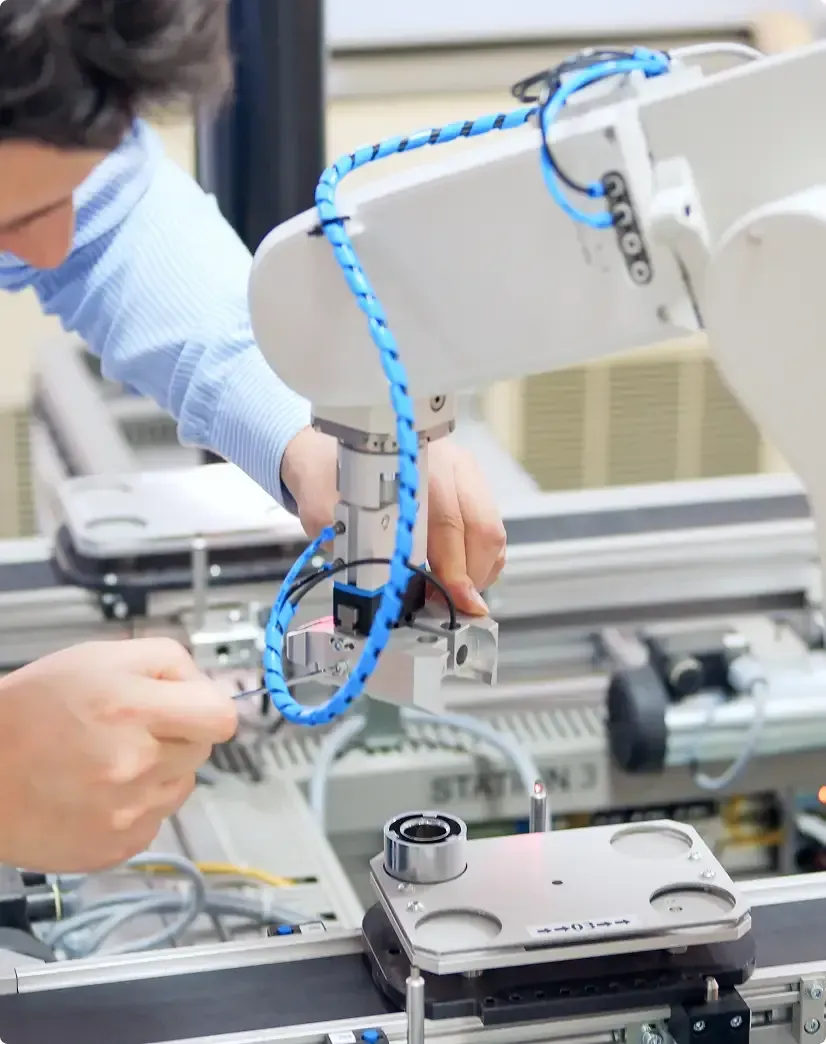
According to the website, projects run in five steps: analysis of the supplied documentation and preprogramming, simulation and testing of the software before deployment, commissioning of the machines and integration of the software with the hardware on site at the customer, handover of technical documentation including operating instructions, and subsequent technical support and service.
Development tools, fieldbuses and standards
On its website, the company lists work with the development tools TIA Portal, Step7, TwinCAT, Studio 5000, Automation Studio, BODAS Design, Embarcadero and Visual Studio, with the industrial protocols and fieldbuses OPC DA / OPC UA, EtherCAT, Profinet, Profibus, CAN bus, Modbus, IO-Link and TCP/IP, and with standards and principles such as Industry 4.0, IEC 61131-3, PLCopen, PackML, object-oriented programming, unit testing and NC/CNC programming (G-code). Among peripherals and components, it names Festo, Keyence, Balluff, IFM, Lenze, Bosch Rexroth, SEW, Sick, Pilz, Wago, Weidmüller, Mitsubishi, Epson and Kuka robots, among others.
Partners and cooperation model
In the section “Companies that grow with us”, the company publishes the logos of its partners, including Grenzebach, Bosch Rexroth, Güdel, Kaltenbach, Stöcklin, Swisslog and Elvac. Among its strengths, it lists flexibility in quickly adding individuals or entire teams and long-term cooperation to which satisfied partners return.
Team, training and careers
The company states that its employees are university-educated specialists with teaching experience and that its trainers have often worked directly at the parent plants of Siemens or Beckhoff. It offers programmers and technicians regular training, business trips abroad, flexible working hours, 5 weeks of holiday and a company car; the selection process starts with a short technical task.